Moose In Alberta
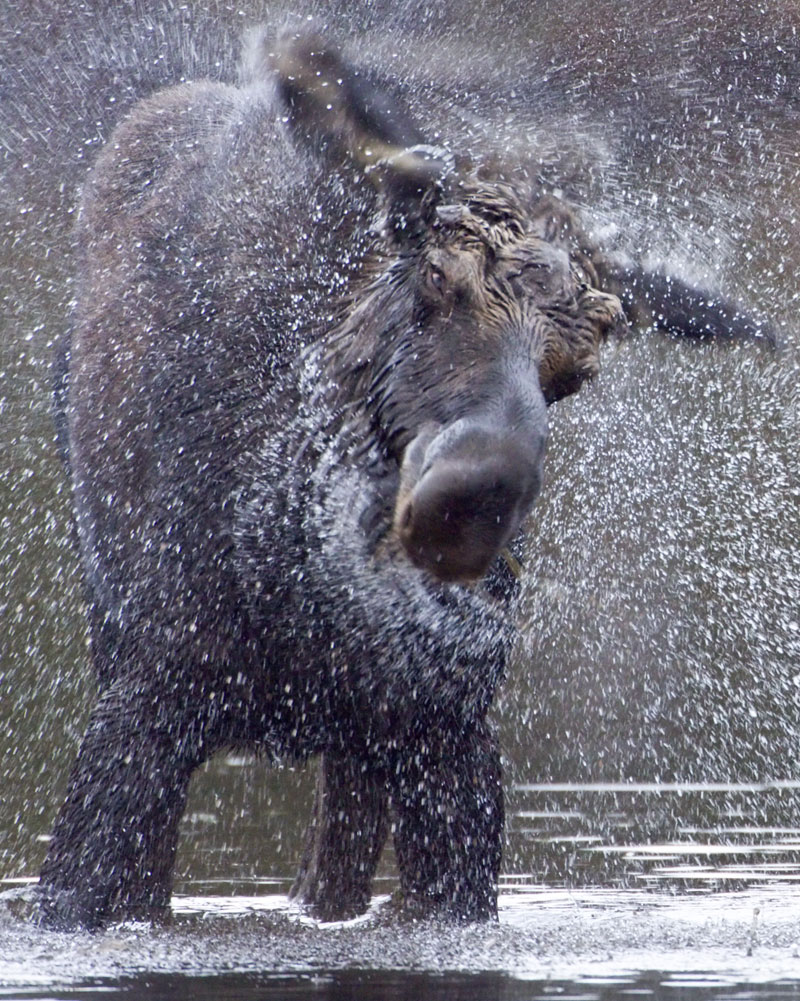
Moose (Alces alces) are the largest member of the deer family (Cervidae), with bull moose standing over two metres at the shoulder and capable of weighing over 700 kg in Alberta. While typically associated with wetland and riparian habitats, moose are well adapted to occupying a wide range of forest and prairie habitats throughout Alberta and can be found in and between all four corners of our province.
In Alberta, two subspecies of moose can be found: the Northwestern "Canada" moose (A.a. andersoni), found primarily in Northern Boreal and Foothills regions, and the Shiras moose (A.a. shirasi), located in the southern Foothills and Mountainous regions. The highest densities of moose in Alberta occur in the mid- and west-central regions of the province. The two subspecies are defined by geographical boundaries, and not any known biological distinctions.
Provincially, moose are listed as "Secure" under the Alberta Wildlife Act. The most recent province-wide estimate (2014-2015) placed Alberta's moose population at approximately 115,000 individuals. In recent years, there has also been a well-documented range expansion of moose into the Parkland and Prairie areas of southeast Alberta, in part due to decreased predation risk and access to agricultural forage in these new habitats. However, this general increase in range does not reflect important regional variations. Local outfitters, hunters, biologists, and Indigenous communities which have expressed concern that some populations in Alberta may be in decline. Across Alberta, moose populations are influenced by several interacting factors that include, but not limited to predation, changes in land use and climate, parasites/disease, and harvest.
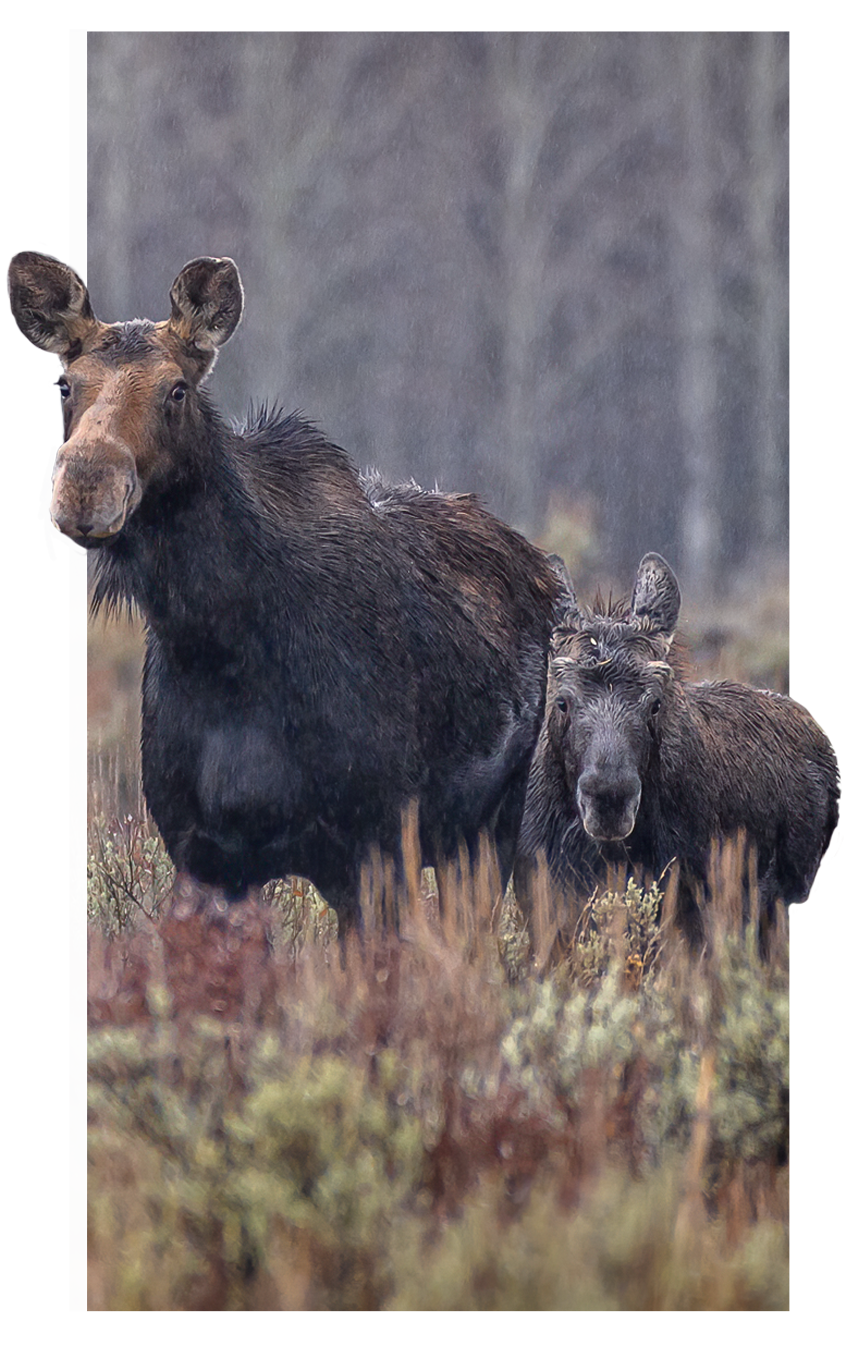

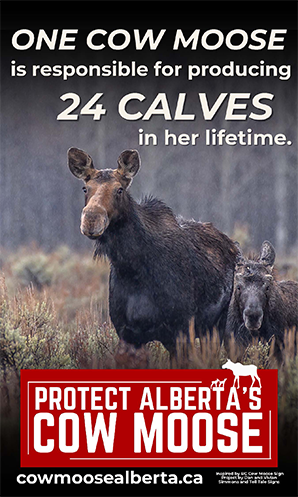
 The Alberta Cow Moose Sign Project was inspired by the grassroots success of The Cow Moose Sign Project in British Columbia, founded by Dan and Vivian Simmons with support from